What Is Lomography Lady Grey 400?
Lomography Lady Grey 400 is a panchromatic black-and-white film with an ISO rating of 400, designed to produce smooth grain, moderate contrast, and a broad tonal range. Unlike many of Lomography's more experimental film stocks, which are known for bold color shifts and unpredictable results, Lady Grey takes a more traditional approach to black-and-white photography.
Its ISO 400 speed makes it versatile enough for changing lighting conditions, and it can be developed using standard black-and-white chemistry. Available in both 35mm and 120 formats, Lady Grey offers a relatively straightforward shooting experience without sacrificing opportunities for experimentation. One thing that makes Lady Grey interesting is how it compares with other popular ISO 400 black-and-white films. Kodak Tri-X 400 is often associated with a punchier, more contrast-heavy look, while films like Ilford HP5 Plus, Ilford Delta 400, and Kodak T-Max 400 have their own distinct characteristics.
Lady Grey is often described as having a softer, more traditional appearance, although the final contrast and grain can vary depending on exposure, development, and scanning. However, ISO 400 doesn't necessarily mean the film will perform equally well in every lighting situation. Analogue Wonderland notes that its results can become somewhat murky in low light, which is worth considering if you're shooting indoors or in darker conditions without additional lighting.
Another interesting aspect of Lady Grey is its flexibility when experimenting with exposure and development. Some photographers push the film by rating it at a higher ISO and extending development, while others have reported interesting results from rating it at ISO 200 and using pull processing. Both approaches can change its contrast, grain, and shadow detail, although the results depend on the development process. I haven't tried pushing or pulling Lady Grey myself yet, but I'd be interested in experimenting with it on future rolls. I'm particularly curious whether adjusting exposure and development would produce a different tonal range from what I saw in my first set of scans.
What Is Lomography Lady Grey 400 Best For?
Lomography Lady Grey 400 is particularly well suited to street photography, candid portraits, travel, and everyday documentary photography. Its ISO 400 speed makes it a practical choice for changing lighting conditions, while its moderate contrast and traditional black-and-white appearance make it a versatile option for photographing everyday life.
In a review published by *The Phoblographer*, photographer Chris Gampat recommends Lady Grey for everyday events, candid photography, and street photography. Similarly, *Analogue Wonderland* highlights its moderate grain, balanced contrast, and flexibility, describing it as one of Lomography's more traditional film stocks. Rather than being a film that demands carefully planned photographs, Lady Grey seems best suited to casual, observational photography. I can see it working especially well for:
- Street photography
- High contrast and punchy aesthetics
- Low-light and overcast days
- Architecture
- Lo-fi cameras (like the Holga or Diana)
- Double exposures and other experiments
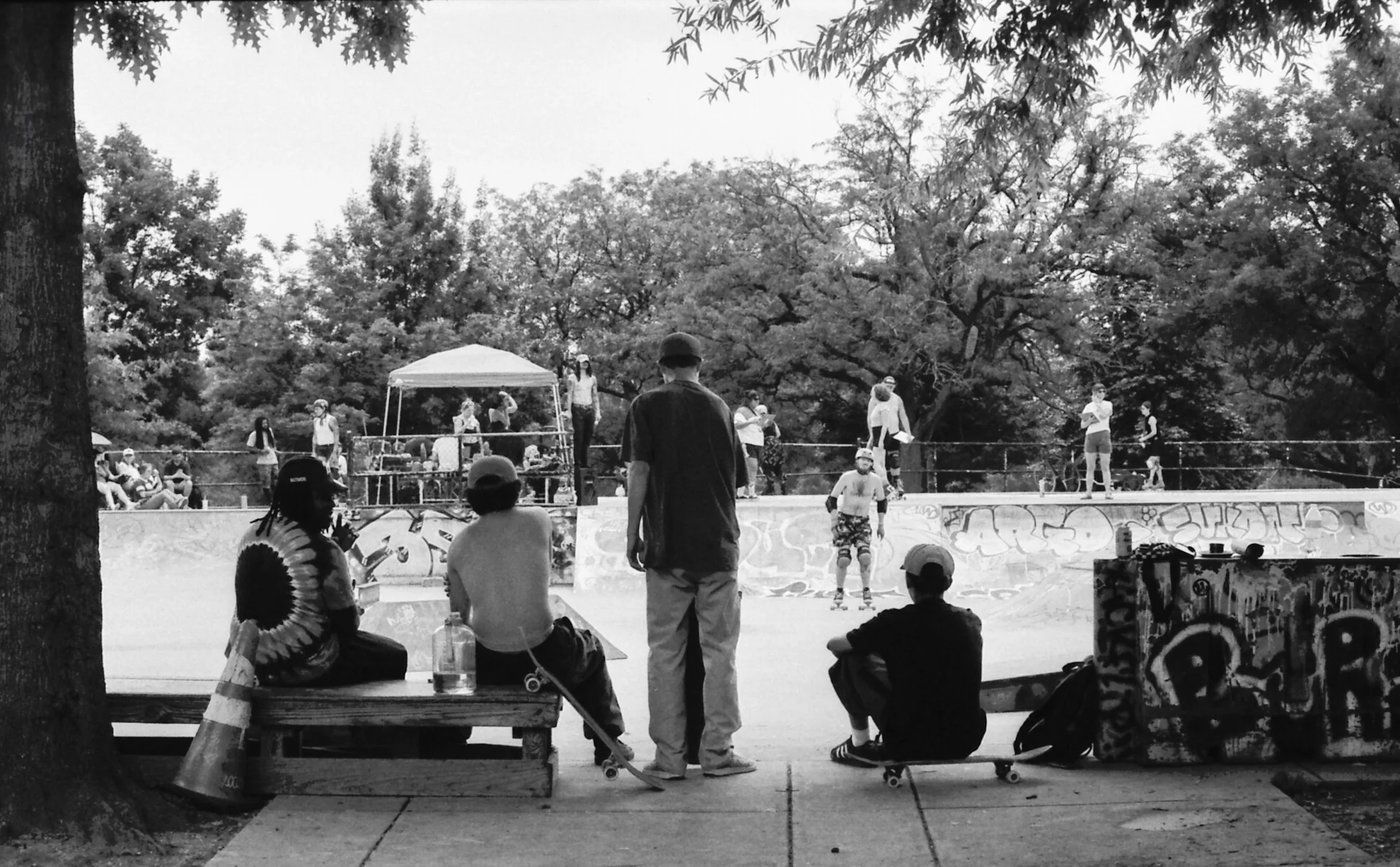
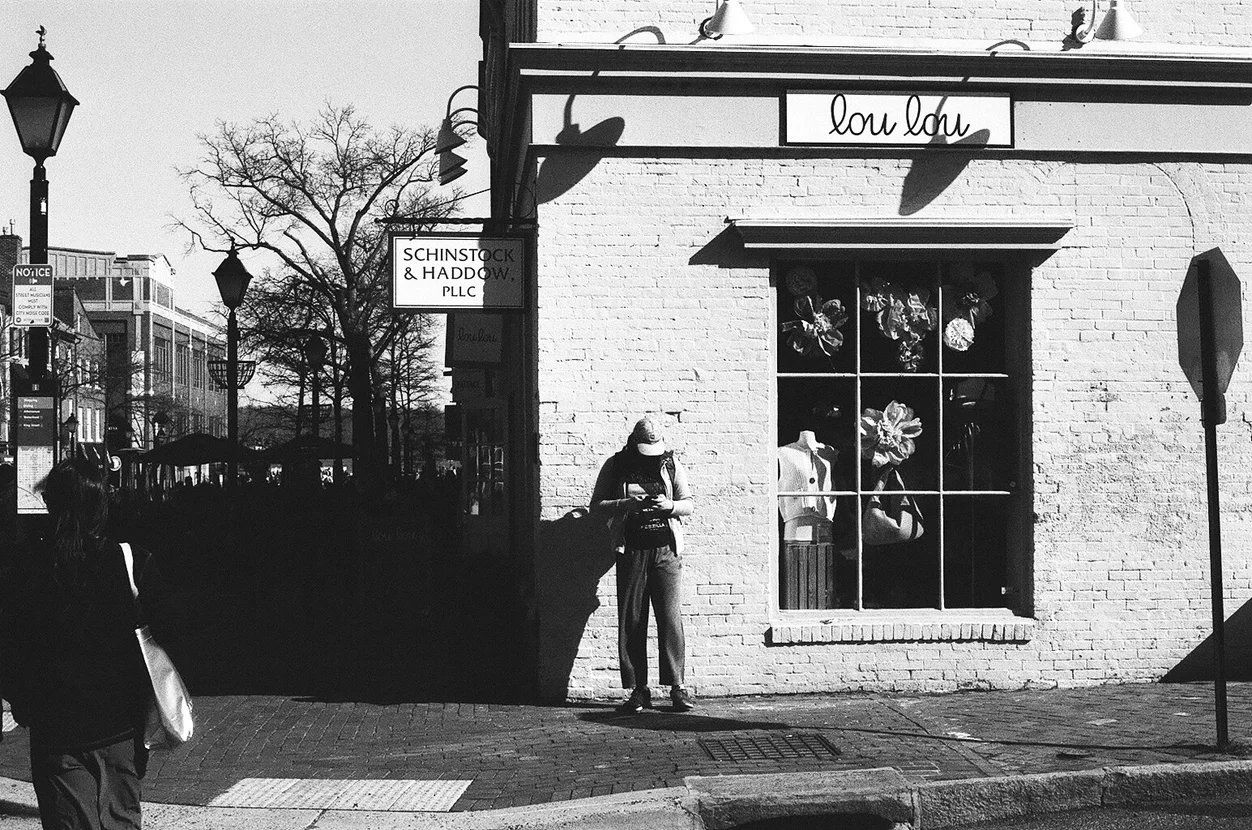
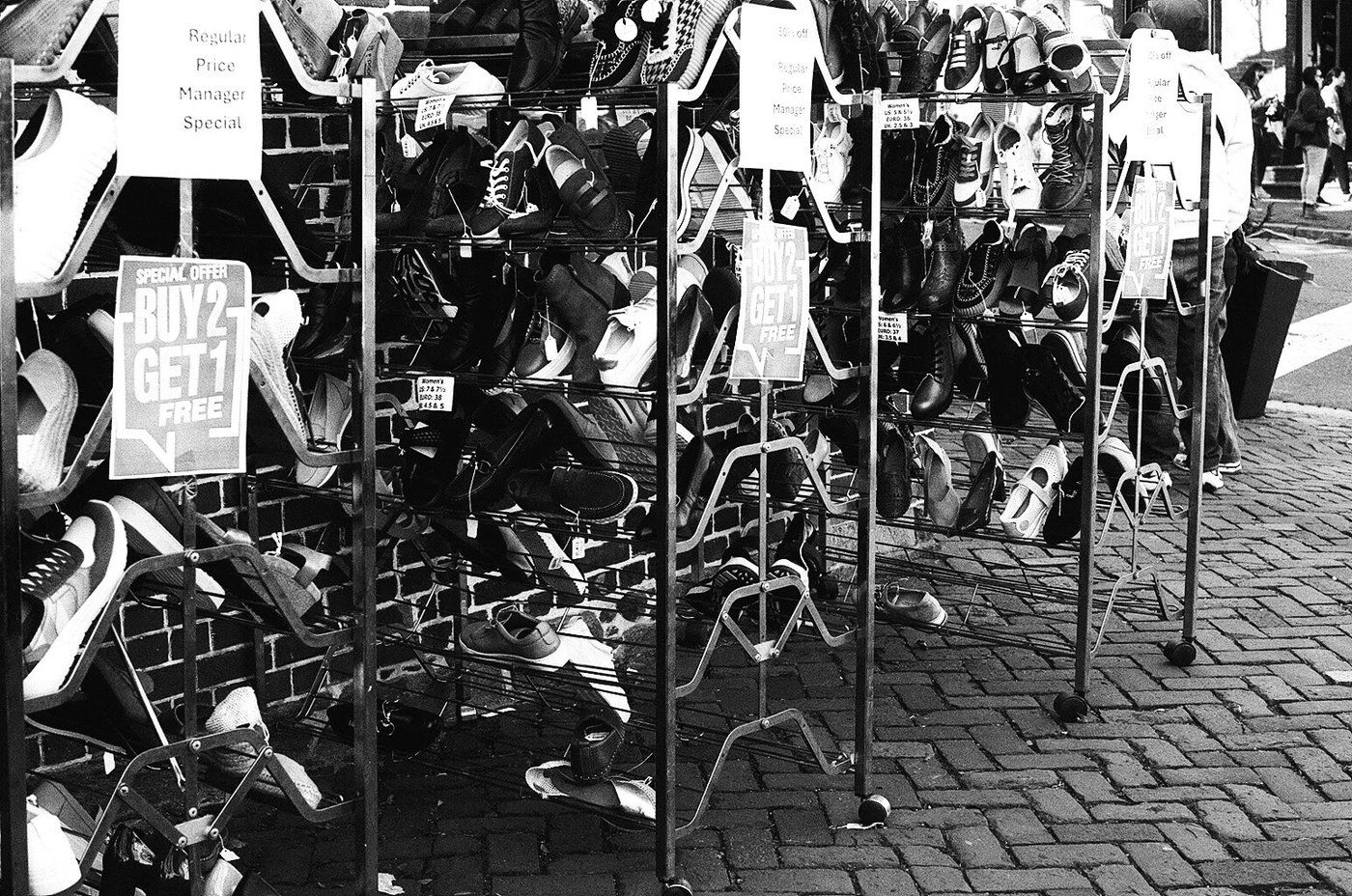
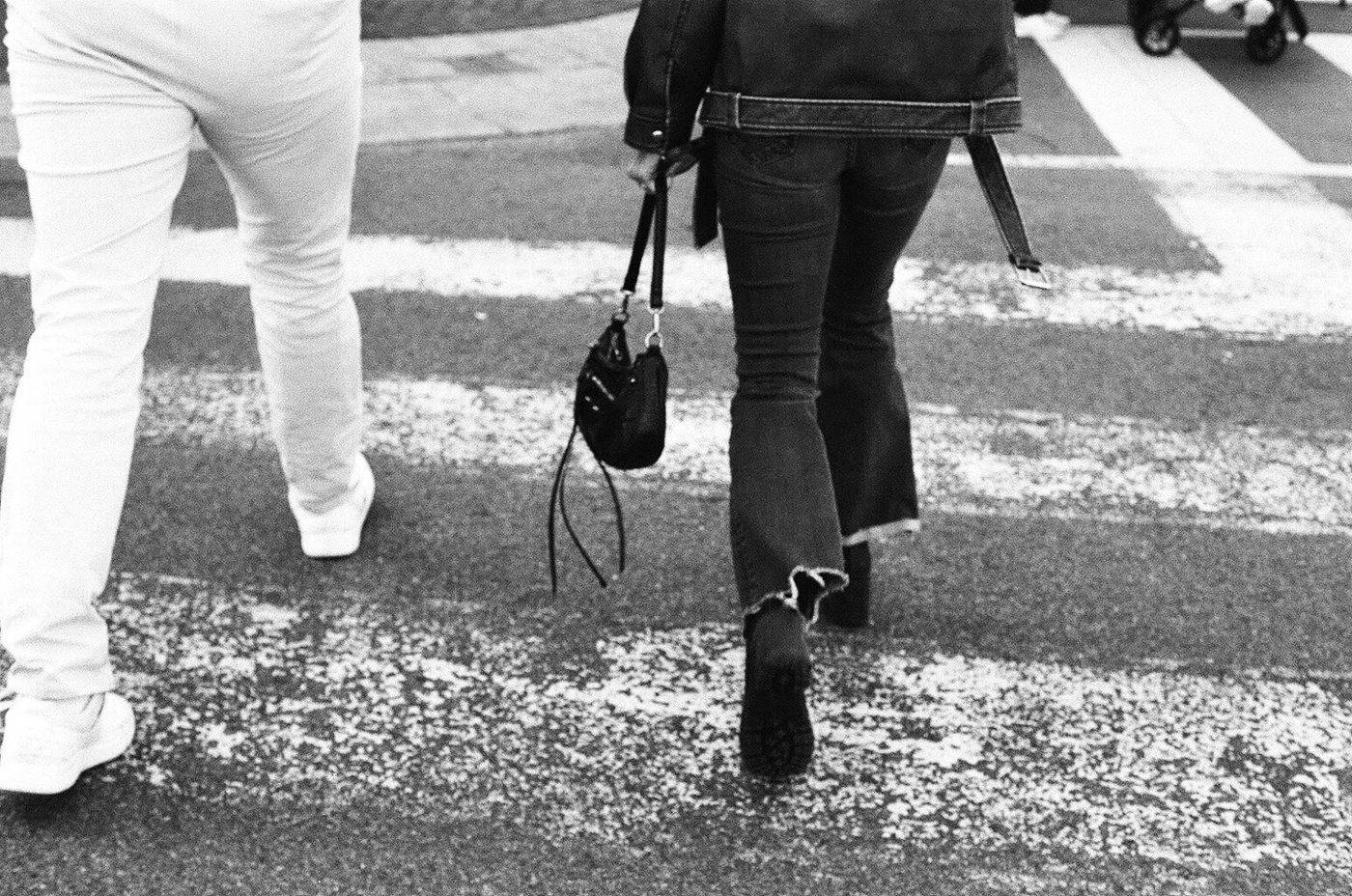
Based on my first roll in Old Town Alexandria, I especially enjoyed photographing pedestrians, storefronts, historic architecture, and scenes with interesting shadows or repeating shapes. Without color to rely on, I found myself paying closer attention to composition, texture, and the way light interacted with my surroundings. Ultimately, Lady Grey seems like the kind of film that benefits from being used rather than saved. Whether you're documenting everyday moments or experimenting with a simple film camera, its versatility makes it an interesting option for photographers who want to explore black-and-white photography.
Shooting My First Roll in Old Town Alexandria
I'd been wanting to shoot more black-and-white film, but I wasn't sure which stock would suit my photography style. Much of my work depends on color, especially when photographing travel, landscapes, concerts, and small details that catch my attention. Shooting Lady Grey meant setting color aside and focusing more on light, texture, shape, and contrast.
It was a nice day out so my boyfriend and i headed to Old Town in Alexandria, Virginia for a day trip. It was our first time going and I regret not visiting sooner. I decided to load my first roll of Lomography Lady Grey 400 for a day exploring Old Town Alexandria, Virginia. Its ISO 400 speed made it a practical choice for moving between different lighting conditions without constantly worrying about having enough light.
At first, I found it difficult to imagine everything without color. I'm usually drawn to warm light, painted buildings, colorful signs, and other details where color plays an important role. Instead, I started noticing shadows, repeating shapes, weathered surfaces, and how people stood out from their surroundings. Scenes that might have seemed ordinary in color became more interesting because of their textures and tonal contrast.
Old Town Alexandria turned out to be a great place to experiment with black-and-white street photography. Between the historic storefronts, brick buildings, pedestrians, and changing sunlight, there was plenty to photograph. I began looking for subjects that worked because of their composition rather than their colors. This was probably my biggest takeaway from shooting this roll. Black-and-white photography isn't simply color photography with the saturation removed. It encourages you to see familiar surroundings differently, and Lady Grey felt like a good film for slowing down, walking around, and photographing whatever caught my attention.
My First Impressions: Grain, Contrast, and Tonal Range
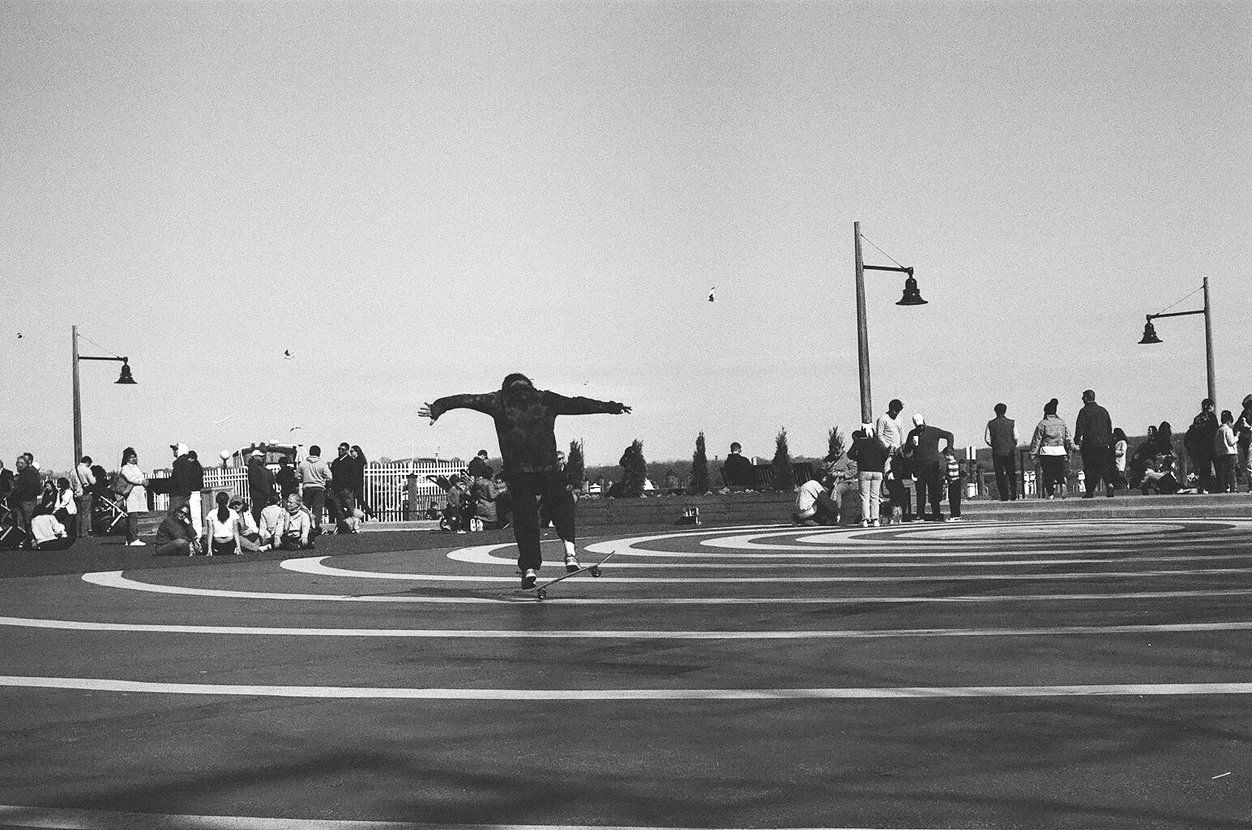
One thing I noticed when reviewing my first roll was that the photographs appeared softer and flatter than I expected. They lacked the punchy contrast I usually associate with black-and-white photography, with fewer deep blacks and bright whites. Instead, the images leaned toward mid-gray tones, creating a more subdued appearance.
The images featured in this post are lab scans with some additional editing done by me. Several of the original scans appeared particularly flat, so I increased the contrast to bring out deeper blacks, brighter highlights, and more separation between tones. I haven't rescanned the original negatives myself yet, so the photographs reflect both the lab's scanning choices and my own adjustments rather than being untouched examples of Lomography Lady Grey 400.
I'm hesitant to attribute the softer appearance entirely to Lomography Lady Grey 400. Black-and-white film leaves plenty of room for interpretation during scanning, where contrast, black and white points, and tonal range can vary considerably. What I'm describing as softness may actually be a lack of tonal contrast rather than a lack of sharpness or detail.
Interestingly, both The Phoblographer and Analogue Wonderland describe Lady Grey as having moderate contrast and a traditional black-and-white appearance. While this might not appeal to photographers who prefer deep blacks and bright highlights, its more subtle tones can work beautifully for portraits, street photography, and softer lighting.
A Film for Everyday Photography and Experimentation
One thing I noticed while reading other reviews was how often Lady Grey was recommended for everyday photography rather than technically demanding situations. Analogue Wonderland also highlights its potential for experimentation with lo-fi cameras, double exposures, long exposures, and unusual compositions. I appreciate that approach because it's easy to get caught up in comparing film stocks based on sharpness, grain, and contrast. While those characteristics matter, they aren't always what makes a photograph interesting.
Looking back at my photographs from Old Town Alexandria, I noticed how much the lighting conditions affected the final appearance. Scenes with naturally low contrast appeared particularly flat, with much of the image falling into similar shades of gray. On the other hand, photographs of pedestrians walking through patches of sunlight had noticeably stronger contrast. The bright light hitting the pavement and people, combined with the surrounding shadows, created greater separation between the highlights and darker areas. Those ended up being some of my favorite photographs from the roll.
This made me realize how important the lighting itself is when shooting black-and-white film. While Lady Grey may have a more subdued appearance, scenes with strong directional light and defined shadows seemed to translate much better in my scans than evenly lit subjects. I'd be interested in trying Lady Grey with a simple point-and-shoot or an older lens in the future. For now, though, I want to better understand what the film can produce with my current setup before introducing too many additional variables.
Final Thoughts on Lomography Lady Grey 400
After shooting my first roll of Lomography Lady Grey 400, I came away with mixed first impressions. I enjoyed the more intentional process of photographing in black and white, especially how it encouraged me to pay closer attention to light, texture, and composition. The lab scans were softer and flatter than I expected, but I'm not ready to attribute that entirely to the film itself. After reading other photographers' experiences, I'm interested in seeing how Lady Grey performs under different lighting conditions and whether rescanning the negatives will change my opinion.
I can understand why it's recommended for street photography and everyday documentary work. Its ISO 400 speed made it a practical choice for exploring Old Town Alexandria, and I appreciate its potential for experimentation without needing technically perfect results. I wouldn't call Lady Grey my favorite black-and-white film just yet, but one roll isn't enough to define it. I plan to give it another chance, whether that's through rescanning these negatives, experimenting with different cameras, or trying new exposure techniques.
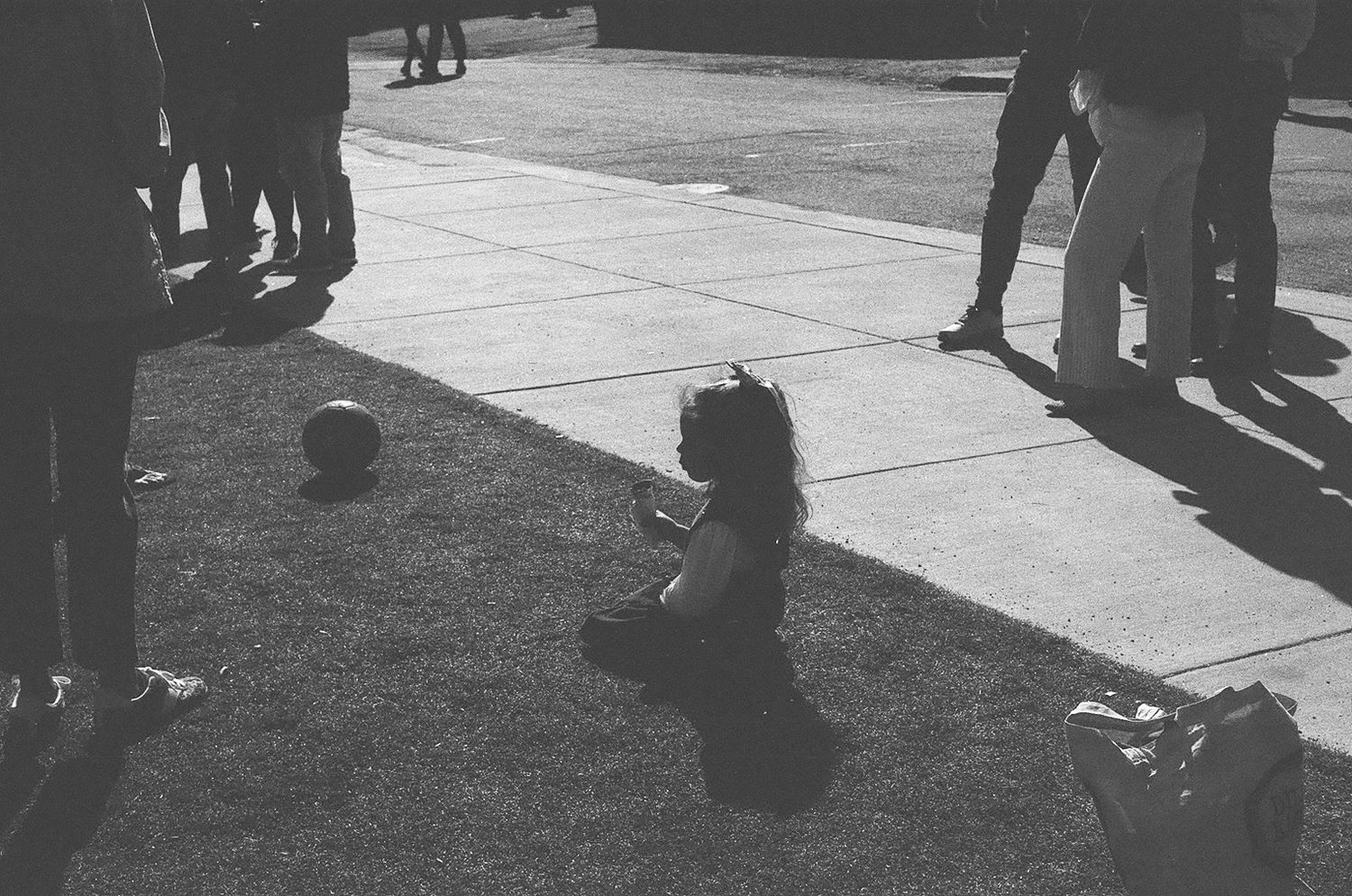
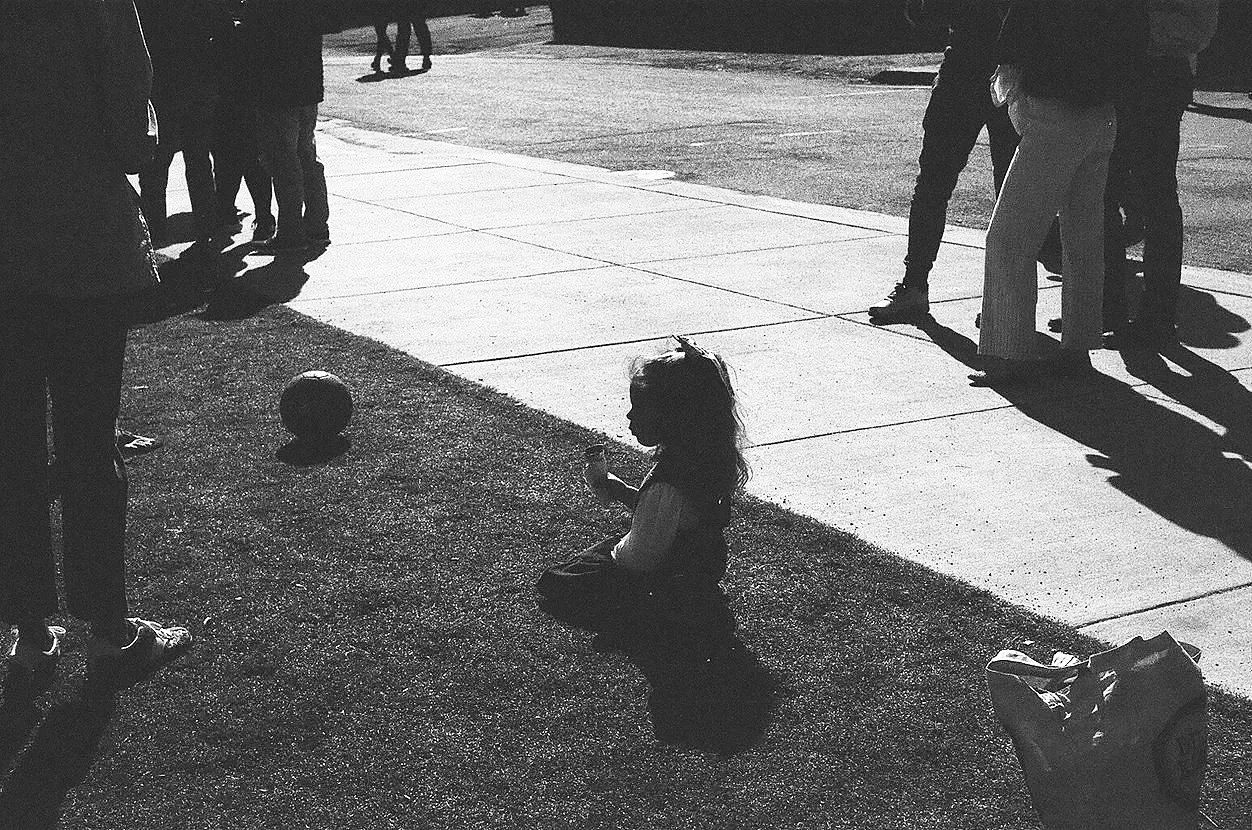
Lab Scan vs. My Edit: The image on the left is the original lab scan, while the image on the right shows my edited version. I deepened the blacks, increased the contrast, and slightly brightened the image to give it more tonal separation.
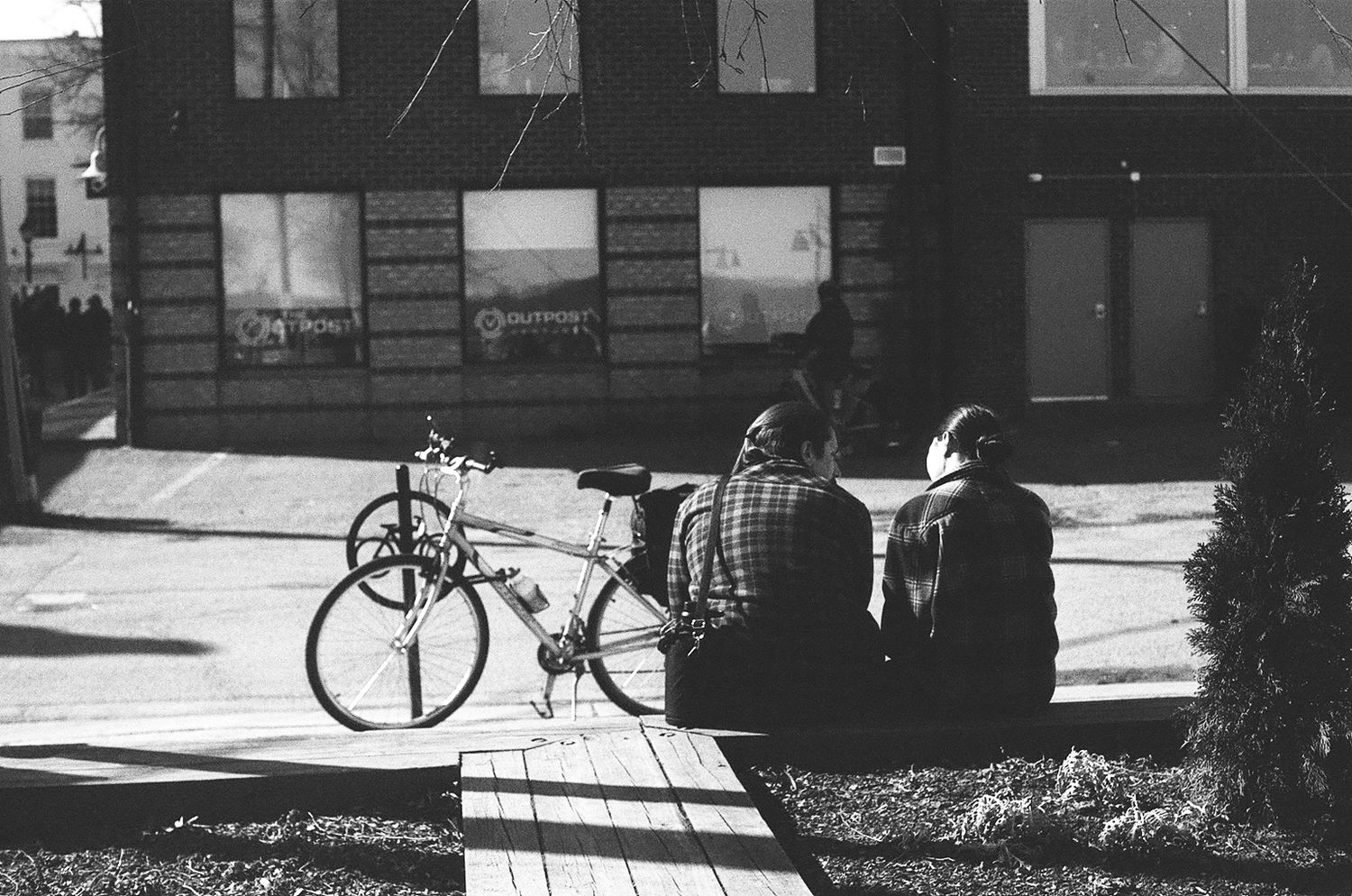
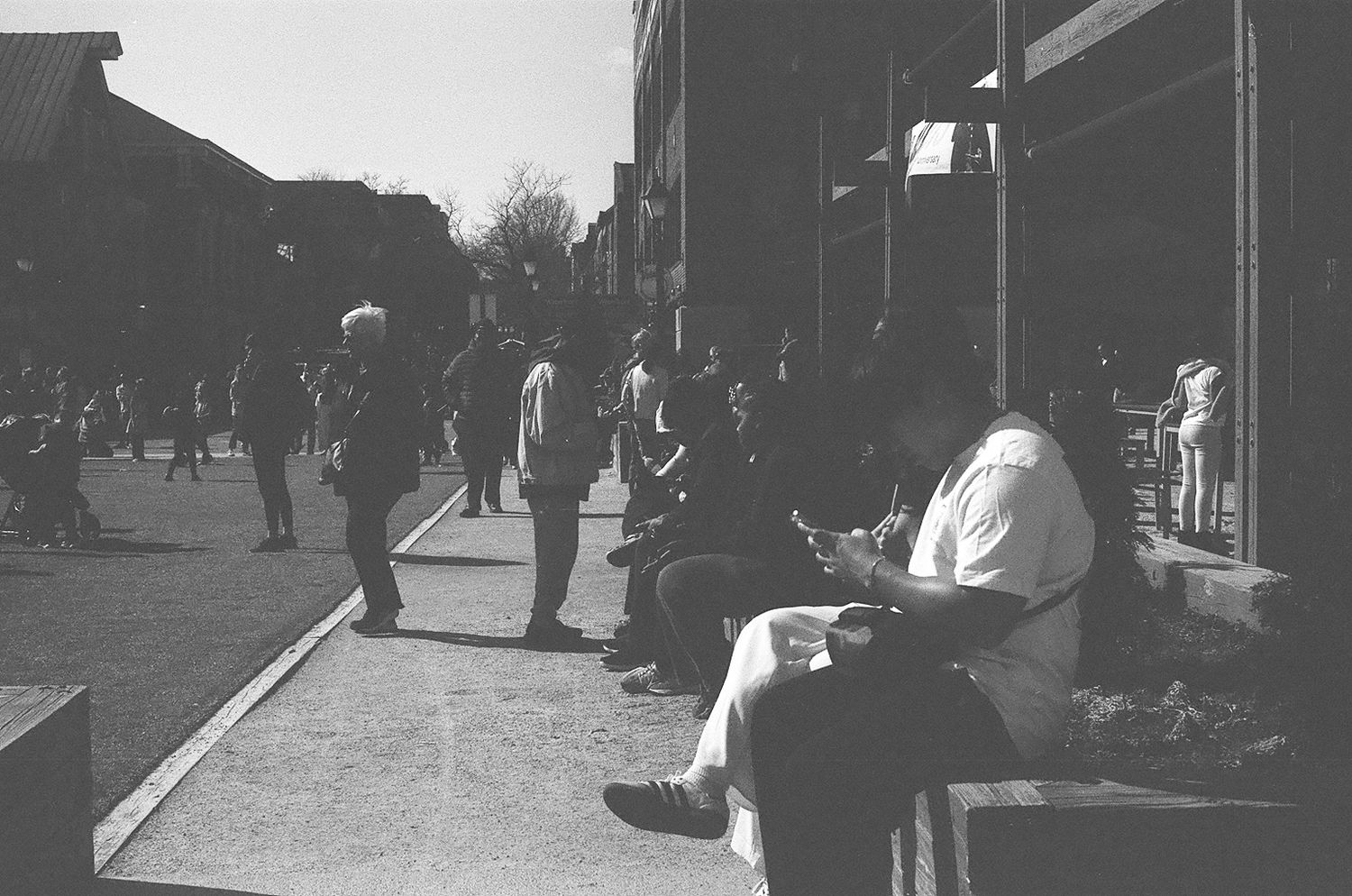
An original lab scan from my first roll of Lomography Lady Grey 400, photographed in Old Town Alexandria, Virginia. Despite the bright sunlight, much of the scene appears flat, with muted contrast and limited separation between the darker tones. The backlighting and the lab's scanning adjustments may have contributed to this softer, gray appearance.
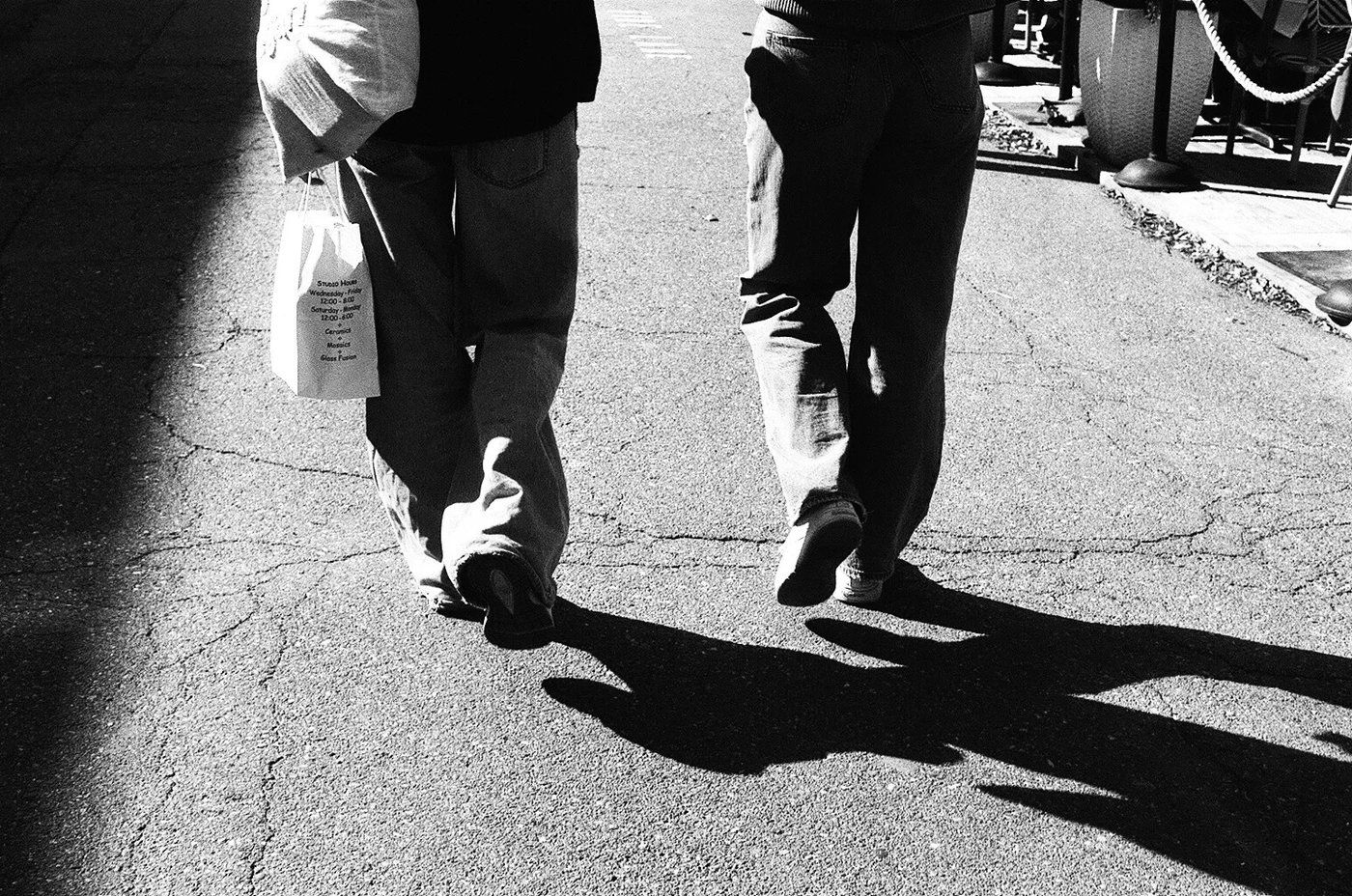
One of my favorite photographs from my first roll of Lomography Lady Grey 400 in Old Town Alexandria, Virginia. The afternoon sunlight created strong contrast between the pedestrians, bright pavement. I love the deep shadows stretching across the street. The lighting gave this black-and-white 35mm film photograph the depth and tonal separation I was hoping to capture.
Further Reading
If you're interested in learning more about Lomography Lady Grey 400, here are a few additional resources that helped me better understand the film and how other photographers have used it.
The Phoblographer — Lomography Lady Grey 400 Review
An in-depth review exploring the film's image quality, contrast, and performance compared with other popular black-and-white film stocks, including Kodak Tri-X 400 and Ilford HP5.
Analogue Wonderland — Lomography Lady Grey 400 Review
Community experiences, sample photographs, and recommendations for shooting Lady Grey 400, including street photography, lo-fi cameras, and creative experimentation.
Official information from Lomography, including the film's specifications, available formats, and recommended uses.